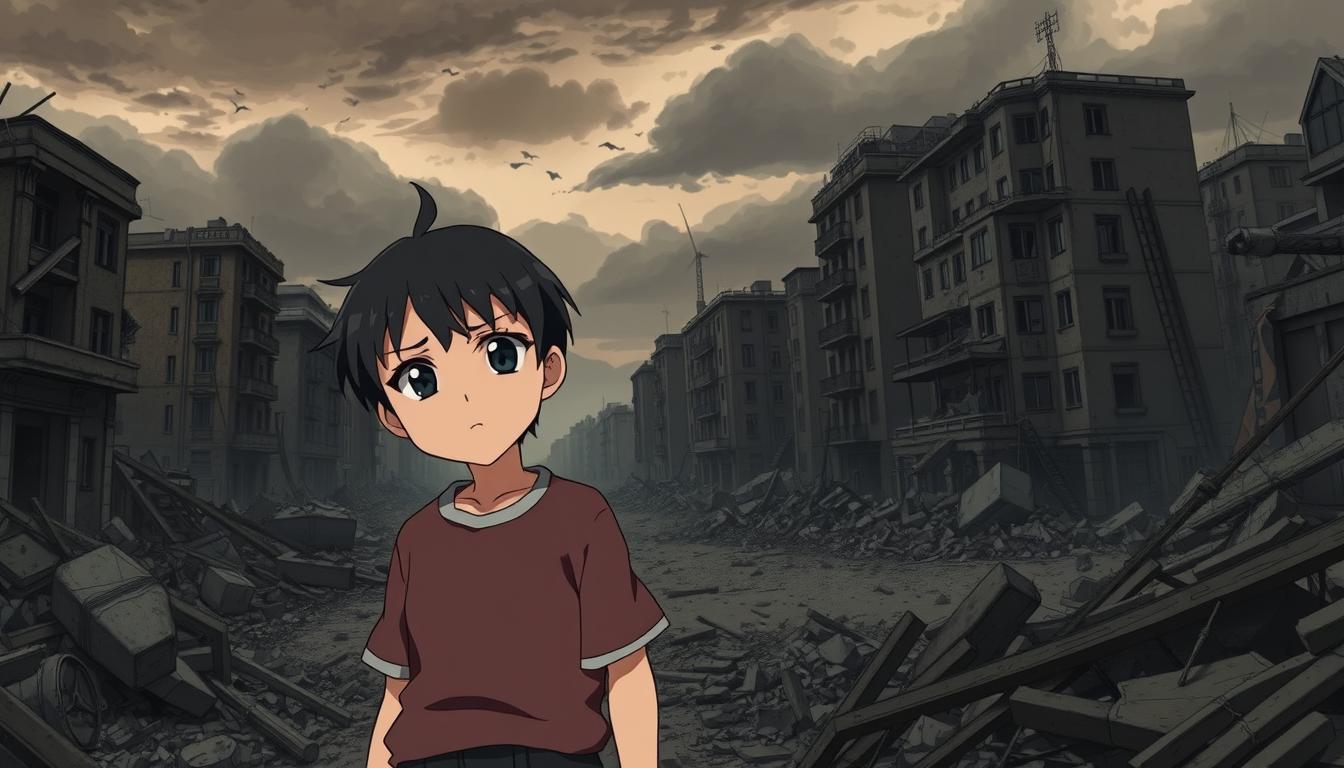
The aftermath of World War II had a profound impact on Japan, leading to a significant cultural transformation. This period saw the emergence of post-war anime as a distinct form of storytelling, reflecting the country’s experiences and societal changes.
How War and Politics Shaped Post-War Anime
The influence of politics and the war on anime is evident in its themes and narratives, often addressing the complexities of Japan’s past and its impact on the nation’s identity.
Understanding this historical context is crucial to appreciating the evolution of anime as a reflection of Japan’s cultural transformation.
Key Takeaways
- The post-war period significantly influenced the development of anime.
- Anime reflects Japan’s cultural transformation after World War II.
- Politics and war have shaped the themes and narratives in anime.
- Understanding the historical context is key to appreciating anime’s evolution.
- Post-war anime serves as a reflection of Japan’s societal changes.
The Historical Context of Post-War Japan
Japan’s surrender in 1945 precipitated a cascade of changes that would redefine the nation’s political, economic, and cultural landscape. The period following World War II was marked by significant upheaval, as Japan transitioned from a state of war to one of occupation and reconstruction.
Japan’s Defeat and American Occupation
The American Occupation, led by General Douglas MacArthur, played a pivotal role in reshaping Japan’s post-war identity. The occupation forces implemented various reforms aimed at demilitarizing and democratizing Japanese society.
Constitutional Changes and Cultural Restrictions
One of the most significant changes was the introduction of a new constitution, which enshrined pacifism and human rights. The occupation authorities also imposed cultural restrictions, aiming to erase militaristic and nationalistic elements from Japanese culture.
Economic Recovery and National Identity Crisis
As Japan began its economic recovery, the nation faced a crisis of national identity. The country struggled to balance its new post-war identity with its pre-war heritage, leading to a complex and often contentious debate about what it meant to be Japanese in the post-war era.

post-war Japan
The Birth of Modern Anime in Post-War Japan
The birth of modern anime in post-war Japan was a complex process involving cultural, economic, and artistic factors. This period saw the transformation of anime from a fledgling industry to a significant cultural force.
Osamu Tezuka and the Foundations of Anime
Osamu Tezuka, often referred to as the “Godfather of Anime,” played a pivotal role in shaping modern anime. His studio, Mushi Productions, produced the first commercially successful anime series, Astro Boy (1963). Tezuka’s innovative storytelling and visual style laid the groundwork for future anime creators.
Western Influences on Early Animation Styles
Early anime was heavily influenced by Western animation styles, particularly those from the United States. Tezuka was inspired by Disney and Fleischer Studios, incorporating some of their techniques into his work. This blend of Eastern and Western styles helped create a unique visual identity for anime.
Toei Animation and the Rise of Commercial Studios
Toei Animation, established in 1948, was one of the first commercial anime studios. It played a crucial role in the development of the anime industry by producing feature films and television series. Toei Animation’s success paved the way for other studios, contributing to the growth of anime as a major entertainment medium.
| Studio | Established | Notable Works |
| Mushi Productions | 1961 | Astro Boy |
| Toei Animation | 1948 | Dragon Ball, Sailor Moon |
How War and Politics Shaped Post-War Anime: Direct Influences
The direct influences of war and politics on post-war anime are multifaceted, involving censorship, creative restrictions, and national trauma. These factors significantly shaped the industry’s early development.
Censorship and Creative Restrictions Under Occupation
During the Allied occupation, anime production was subject to strict censorship. The occupying forces imposed significant restrictions on content, prohibiting any material deemed militaristic or nationalistic. This led to a cautious approach among anime creators, who had to navigate these restrictions while still conveying their messages.
- Prohibition of militaristic content
- Restrictions on nationalistic themes
- Promotion of democratic values
Processing National Trauma Through Animation
Anime became a medium for processing the national trauma experienced during World War II. Creators used symbolic representations to convey the complexities of war and its aftermath, often veiling direct references to sensitive topics.
Symbolic Representations of War Experiences
Many anime works employed symbolic representations to depict the horrors of war and the impact on civilians. For example, the use of monsters or fantastical creatures to represent the destructive forces of war allowed creators to address traumatic events indirectly.
The use of such symbolism enabled anime to tackle complex themes, providing a unique lens through which to view and understand the experiences of those who lived through World War II.
The Atomic Legacy in Anime
Anime, as a medium, has uniquely captured the trauma and legacy of the atomic bombings in Japan, reflecting the nation’s complex relationship with nuclear power. The atomic legacy is a pervasive theme in many anime works, serving as a reminder of the devastating consequences of nuclear warfare.
Godzilla and Kaiju Films as Nuclear Metaphors
Godzilla, one of the most iconic characters in anime, was born out of the nuclear tests in the Pacific during the 1950s. The original 1954 film, Godzilla, directed by Ishirō Honda, used the monster as a metaphor for the fears associated with nuclear weapons. Godzilla’s destructive power symbolized the horrors of nuclear warfare, resonating with the Japanese public’s experience of the atomic bombings. Over the years, Godzilla has appeared in numerous films, often serving as a nuclear metaphor, reflecting changing attitudes towards nuclear power and warfare.
Astro Boy and the Ambivalence Toward Technology
Osamu Tezuka’s Astro Boy (Tetsuwan Atom) is another seminal work that explores the atomic legacy, albeit with a focus on the ambivalence toward technological advancements. Created in 1952, Astro Boy is a robotic boy with atomic power, symbolizing both the potential benefits and risks of scientific progress. Tezuka’s work often walked a fine line between optimism about technological advancements and cautionary tales about their misuse, reflecting the complex feelings towards nuclear technology post-1945.
Barefoot Gen and Direct Hibakusha Narratives
In contrast to the metaphorical approaches of Godzilla and Astro Boy, Barefoot Gen (Hadashi no Gen) by Keiji Nakazawa offers a direct and personal narrative about the atomic bombing of Hiroshima. Based on Nakazawa’s own experiences as a hibakusha (atomic bomb survivor), the manga and subsequent anime film provide a harrowing account of the bombing and its aftermath. Barefoot Gen is a powerful anti-war statement, conveying the human cost of nuclear conflict and serving as a testament to the suffering endured by those who lived through the atomic bombings.
The diverse ways in which anime addresses the atomic legacy underscore the complexity of Japan’s historical experience and its cultural response to nuclear trauma. Through various narratives and metaphors, anime creators have contributed to a nuanced public discourse on the implications of nuclear power and warfare.
Military Themes and Anti-War Messaging
In the realm of anime, military themes are often intertwined with powerful anti-war messages. This blend of action and ideology has captivated audiences worldwide, offering a complex exploration of conflict and its consequences.
Pacifist Ideologies in Mobile Suit Gundam
Mobile Suit Gundam is a seminal series that embodies pacifist ideologies within a military science fiction narrative. The franchise critiques the notion of war through its portrayal of the devastating effects on individuals and society. By exploring the moral ambiguities of conflict, Gundam promotes a message of peace and cooperation.
Space Battleship Yamato and National Memory
Space Battleship Yamato is another influential anime that weaves military themes with anti-war sentiments, significantly impacting Japan’s national memory. The series recounts the story of the Yamato, a WWII Japanese battleship, being resurrected to fight against an alien invasion. It symbolizes Japan’s complex relationship with its wartime past and its aspirations for peace.
The Transformation of Imperial Symbols
The transformation of imperial symbols, such as the reimagining of the Yamato as a symbol of resistance rather than aggression, reflects a broader cultural shift. This reinterpretation allows for a nuanced exploration of historical identity and national pride, divorced from militaristic connotations.
The use of military themes in anime like Mobile Suit Gundam and Space Battleship Yamato underscores the medium’s capacity for nuanced storytelling and ideological commentary. By balancing action with anti-war messaging, these series contribute to a richer understanding of the complexities surrounding conflict and peace.
Economic Politics and Their Reflection in Anime
The economic politics of post-war Japan significantly influenced anime, introducing themes of technological optimism and corporate critique. As the country’s economy grew, anime began to reflect the changing societal values and technological advancements.
The Economic Miracle and Technological Optimism
Japan’s rapid economic growth, often referred to as the “economic miracle,” had a profound impact on anime. This period saw the rise of technological optimism, with anime frequently depicting futuristic worlds and advanced technologies. Works like Akira and Ghost in the Shell showcased Neo-Tokyo as a symbol of Japan’s futuristic aspirations.
Neo-Tokyo and Urban Futurism
Neo-Tokyo, a recurring setting in anime, represents the fusion of traditional Japanese culture with cutting-edge technology. This futuristic urban landscape is often portrayed as a hub of innovation and progress, reflecting Japan’s ambitions during its economic boom.
Critiques of Corporate Power in 1980s Anime
As Japan’s economy continued to grow, anime also began to critique the darker aspects of this growth, particularly the rise of corporate power. Series like Urusei Yatsura and Appleseed touched on the tensions between technological advancement and social change. These works often depicted corporations as powerful entities that could both drive progress and exert control over individuals.
Some key aspects of corporate power critiqued in 1980s anime include:
- The exploitation of technology for corporate gain
- The impact of corporate culture on individual identity
- The ethical implications of advanced technologies
By examining these themes, anime provided a nuanced reflection of Japan’s economic politics during the post-war period, offering both optimistic visions of the future and critical perspectives on the challenges of rapid economic growth.
Cold War Influences on Anime Narratives
The ideological divide of the Cold War significantly shaped the narrative themes in anime. As the world was polarized between Eastern and Western blocs, anime reflected this tension through various genres, particularly in spy and action series.
East-West Tensions in Spy and Action Series
Spy and action anime often used the Cold War as a backdrop, exploring themes of espionage, loyalty, and the moral ambiguities of the era. Shows like Lupin III and Golgo 13 featured protagonists navigating complex geopolitical landscapes, often walking the fine line between patriotism and personal gain.
Patlabor and Domestic Security Politics
The anime series Patlabor is a notable example of how domestic security politics were represented during the late Cold War era. It explored the use of advanced technology in law enforcement and the implications of militarization on society. Patlabor reflected concerns about the role of technology in maintaining security and the potential for its misuse.
Reflections of US-Japan Security Relations
The security relationship between the US and Japan was another significant theme. Anime often touched upon the complexities of this alliance, including the presence of US military bases in Japan and the impact on local communities. This narrative thread highlighted the tensions between national sovereignty and international security obligations.
| Anime Series | Cold War Theme | Narrative Focus |
| Lupin III | Espionage and Heists | Moral ambiguity and adventure |
| Golgo 13 | Assassination and Espionage | Professionalism and moral dilemmas |
| Patlabor | Domestic Security and Technology | Militarization and societal impact |
The Cold War had a lasting impact on anime, influencing not only the narratives but also the thematic concerns of the medium. By examining these influences, we gain a deeper understanding of how anime reflected and shaped perceptions of the Cold War era.
Landmark Anime Works Shaped by War and Politics
Several landmark anime works have been directly influenced by the historical context of war and politics in post-war Japan. These films not only reflect the country’s complex past but also offer insights into the broader themes of conflict, technology, and human psychology.
Grave of the Fireflies and Civilian War Experiences
Grave of the Fireflies, directed by Isao Takahata, is a powerful portrayal of the civilian experience during World War II. The film follows two orphaned siblings struggling to survive in war-torn Japan, highlighting the human cost of conflict. This poignant narrative serves as a stark reminder of the devastating effects of war on innocent civilians.
Akira and Post-Apocalyptic Political Commentary
Katsuhiro Otomo’s Akira is set in a post-apocalyptic Neo-Tokyo and explores themes of psychic powers, government conspiracies, and the dangers of unchecked technological advancement. The film is a commentary on the political and social anxieties of the time, reflecting fears of nuclear devastation and the militarization of society.
Ghost in the Shell and Technological Politics
Ghost in the Shell, directed by Mamoru Oshii, delves into the intersection of humanity and technology, raising questions about identity, consciousness, and the impact of technological advancements on society. The film’s exploration of a cybernetic world reflects concerns about the political and ethical implications of emerging technologies.
Neon Genesis Evangelion’s Psychological Warfare
Neon Genesis Evangelion, created by Hideaki Anno, is a seminal series that explores the psychological effects of piloting giant mechs known as Evangelions against monstrous beings called Angels. The series is a complex allegory for the psychological trauma associated with war and the societal pressures faced by the protagonists.
These landmark anime works not only reflect the historical and political context of their time but continue to influence the genre, offering profound insights into the human condition and the complexities of war and politics.
Studio Ghibli and Political Messaging
The political undertones in Studio Ghibli’s movies have captivated audiences worldwide, reflecting the studio’s deep engagement with societal issues. Studio Ghibli, co-founded by Hayao Miyazaki, has been at the forefront of incorporating meaningful political narratives into their films.
Hayao Miyazaki’s Anti-War Philosophy
Hayao Miyazaki‘s anti-war philosophy is a recurring theme in many of his works. Films like Nausicaä of the Valley of the Wind and The Wind Rises showcase Miyazaki’s critique of war and its devastating consequences. This philosophy is deeply rooted in his personal experiences and observations of historical events.
Environmental Politics in Princess Mononoke and Nausicaä
Studio Ghibli’s exploration of environmental politics is evident in films such as Princess Mononoke and Nausicaä of the Valley of the Wind. These movies highlight the conflict between human activities and the natural world, advocating for a harmonious coexistence with nature.
The Wind Rises and Historical Revisionism Debates
The Wind Rises, while celebrated for its beautiful animation, sparked debates due to its portrayal of Jiro Horikoshi, the designer of the Mitsubishi A6M Zero fighter plane. Critics argue that the film glorifies a figure associated with Japan’s wartime atrocities, touching on issues of historical revisionism. Miyazaki’s nuanced approach to complex historical figures adds depth to the narrative, inviting viewers to reflect on the multifaceted nature of history.
The Evolution of Political Themes in Contemporary Anime
Contemporary anime has evolved to incorporate complex political themes, reflecting the changing landscape of Japan’s societal values. This evolution is marked by a shift from direct to more allegorical political commentary, allowing creators to address sensitive topics without explicit statement.
From Direct to Allegorical Political Commentary
Modern anime often employs allegory to critique political issues, making it more accessible and less confrontational. This approach enables creators to explore complex themes like nationalism and identity without being overtly didactic.
Nationalism and Identity in Post-Bubble Era Anime
The post-bubble era in Japan saw a resurgence of nationalist sentiments, which anime reflects through various narratives. Series from this period often grapple with what it means to be Japanese in a globalized world.
Attack on Titan and Modern Military Allegories
Attack on Titan is a prime example of modern military allegory, exploring themes of militarism, totalitarian regimes, and the human condition under siege. The series serves as a commentary on contemporary issues like xenophobia and the militarization of society.
| Anime Series | Political Theme | Allegorical Representation |
| Attack on Titan | Militarism and Xenophobia | Sibyl System as a metaphor for government control |
| Gundam | Anti-War Messaging | Mobile Suits as symbols of military power |
| Psycho-Pass | Surveillance State | Sibyl System as metaphor for government control |
Conclusion
The impact of war and politics on post-war anime is a complex and multifaceted phenomenon that has shaped the industry into what it is today. Through examining the historical context of Japan’s defeat and occupation, the rise of modern anime, and the various influences of war and politics, it becomes clear that anime serves as a significant reflection of Japan’s cultural transformation.
From Osamu Tezuka’s pioneering work to Studio Ghibli’s environmentally conscious narratives, anime has consistently addressed the traumas and challenges faced by Japan. The legacy of nuclear warfare, the influence of military themes, and the critique of corporate power have all been explored through the medium. As a result, anime provides a unique lens through which to understand Japan’s post-war identity and its ongoing struggle to come to terms with its past.
In understanding how war and politics shaped post-war anime, we gain insight into the ways in which cultural production can both reflect and shape national identity. As the anime industry continues to evolve, it is likely that the themes and motifs explored in this article will remain relevant, offering a continued commentary on the human experience and the complexities of Japan’s post-war world.
FAQ
How did the American occupation influence the development of post-war anime?
The American occupation significantly influenced post-war anime by imposing censorship and creative restrictions, which shaped the industry’s early development and narrative themes.
What role did Osamu Tezuka play in shaping modern anime?
Osamu Tezuka is credited with laying the foundations of modern anime, introducing new animation techniques and narrative styles that influenced the industry’s growth.
How did the atomic bombings of Hiroshima and Nagasaki impact anime narratives?
The atomic bombings had a profound impact on anime, with many works serving as nuclear metaphors or directly addressing the experiences of hibakusha, such as in Barefoot Gen.
What is the significance of Studio Ghibli in the context of political anime?
Studio Ghibli, particularly through the works of Hayao Miyazaki, has been instrumental in conveying anti-war and environmental messages, contributing to the broader political discourse in anime.
How have contemporary anime series addressed political themes?
Contemporary anime has evolved to include a range of political themes, from direct commentary to allegorical narratives, reflecting changing societal attitudes and concerns, as seen in series like Attack on Titan.
What is the relationship between anime and Japan’s national identity?
Anime often reflects and influences Japan’s national identity, addressing themes such as nationalism, technological optimism, and historical memory, thus serving as a cultural mirror.
How did the Cold War influence anime narratives?
The Cold War had a notable impact on anime, with many series reflecting East-West tensions and domestic security politics, as well as the complexities of US-Japan security relations.
Can you provide examples of landmark anime works shaped by war and politics?
Landmark works include Grave of the Fireflies, Akira, Ghost in the Shell, and Neon Genesis Evangelion, each addressing different aspects of war, politics, and technology


