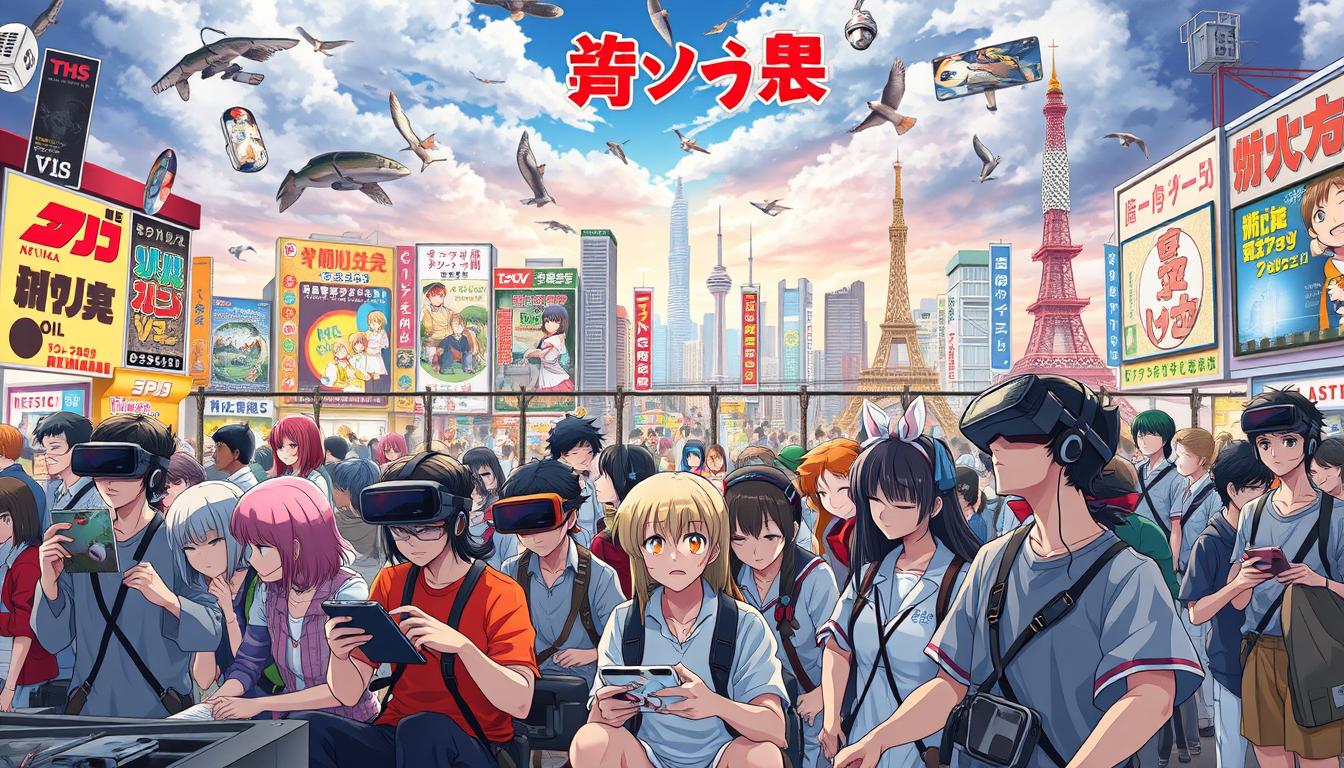
Anime fandom has undergone significant transformations over the decades, evolving into the vibrant otaku culture we know today. From its humble beginnings to the current global phenomenon, anime has captivated audiences worldwide.
The Birth of Otaku Culture
The otaku culture has been shaped by various factors, including technological advancements and the rise of social media, allowing fans to connect and share their passion for anime.
As we explore the evolution of anime fandom, it becomes clear that the community has become more diverse and inclusive, embracing new trends and technologies.
Key Takeaways
- The evolution of otaku culture spans multiple decades.
- Technological advancements have played a crucial role in shaping anime fandom.
- Anime has become a global phenomenon, captivating diverse audiences.
- The rise of social media has connected fans worldwide.
- Otaku culture continues to evolve, embracing new trends and technologies.
The Origins of Anime in Post-War Japan
In the aftermath of World War II, Japan witnessed the emergence of a unique form of animation that would eventually captivate global audiences. This period was crucial for the development of anime, as it not only reflected the country’s cultural and social changes but also contributed to its entertainment industry’s growth.
Early Animation Pioneers: Osamu Tezuka and Toei Animation
Osamu Tezuka, often referred to as the “God of Manga,” played a pivotal role in shaping early anime. His studio, Mushi Productions, produced the first Japanese animated television series, Astro Boy, in 1963. Toei Animation, another influential studio, contributed significantly to the medium’s development with films like Hakujaden (The Tale of the White Serpent) in 1958. These pioneers laid the groundwork for future generations of anime creators.
The Foundations of a Visual Storytelling Revolution
The innovative storytelling and visual styles introduced by these early anime pioneers revolutionized the medium. Techniques such as limited animation, which allowed for faster production and lower costs, became standard practices. This period also saw the emergence of various genres within anime, from science fiction to romance, catering to a wide range of audiences. The visual storytelling revolution in anime not only reflected Japan’s cultural identity but also began to influence global animation trends.

anime origins
The Birth of Otaku Culture: Emergence of a Dedicated Fandom
The 1980s marked a pivotal era for anime fandom, as the term “otaku” became synonymous with dedicated enthusiasts. This period saw a significant shift in how fans engaged with anime, transforming from casual viewers to devoted collectors.
Coining of the Term “Otaku” in the 1980s
The term “otaku” was first used in the early 1980s by anime and manga fans to describe themselves. It was popularized through magazines and fan communities, becoming a badge of honor for those deeply invested in anime culture.
From Casual Viewers to Devoted Collectors
As anime’s popularity grew, so did the enthusiasm of its fans. Fans began to seek out more than just the shows themselves; they wanted related merchandise, manga, and other media. This marked the beginning of a culture centered around collecting and fandom.
The Role of Manga and Merchandise
Manga and merchandise played crucial roles in the development of otaku culture. Fans collected manga volumes, figurines, and other merchandise, showcasing their dedication. This culture of collecting reinforced the identity of otaku, distinguishing them within the broader fan community.
The convergence of these elements—dedicated fandom, the rise of the term “otaku,” and the culture of collecting—defined the otaku phenomenon of the 1980s. It laid the groundwork for the global anime fandom we see today.
1970s-1980s: Anime’s Golden Age and Fandom Evolution
Anime’s golden age in the 1970s and 1980s was defined by landmark series that captivated audiences and inspired a new generation of fans. This period saw the emergence of complex storytelling, deeper character development, and a diversification of genres.
Landmark Series That Defined Generations
Series such as Mobile Suit Gundam and Space Battleship Yamato became cultural touchstones, influencing not only the anime industry but also Japanese popular culture as a whole. These shows introduced themes of science fiction, adventure, and social commentary that resonated with viewers.
The Formation of Fan Communities in Japan
As anime’s popularity grew, so did the formation of fan communities. Fans began to organize events and create their own content, laying the groundwork for the modern otaku culture.
Comiket and the Doujinshi Phenomenon
One of the most significant developments during this period was the rise of Comiket, a biannual convention where fans could share and purchase doujinshi (fan-created works). This phenomenon allowed fans to express their creativity and connect with others who shared their passions.
| Event | Year | Significance |
| First Comiket | 1975 | Marked the beginning of organized fan content creation |
| Rise of Doujinshi | Late 1970s | Enabled fans to create and distribute their own stories and art |
Western Discovery: Anime’s Journey to America
The spread of anime in America was facilitated by various factors, including localized adaptations and underground fan networks. As anime began to gain traction, its introduction to the Western world marked a significant turning point in its global popularity.
Localized Adaptations and Their Impact
Localized adaptations played a crucial role in making anime more accessible to American audiences. Dubbed versions of popular series allowed viewers who were not familiar with Japanese culture to enjoy anime without the barrier of subtitles. However, these adaptations sometimes faced criticism for altering content to suit Western tastes.
College Clubs and Underground Fan Networks
College campuses became hubs for anime fan clubs, where enthusiasts could gather to share their passion. These underground networks were instrumental in spreading anime culture through college clubs and informal screenings. Fans would often exchange VHS tapes, fostering a community around shared interests.
The VHS Trading Era
The VHS trading era was a pivotal moment in the spread of anime fandom in America. Fans relied on VHS trading to access content that was not widely available. This era, though marked by challenges such as video quality degradation over time, helped build a robust network of anime enthusiasts.
As anime continued to grow in popularity, these early fan networks laid the groundwork for the modern anime community in America. The legacy of localized adaptations, college clubs, and VHS trading can still be seen in today’s vibrant and diverse fandom.
1990s: The Anime Explosion in North American Culture
The 1990s witnessed a significant surge in anime popularity across North America, marking a pivotal moment in the history of anime fandom. This decade was characterized by the introduction of several breakthrough titles that not only captivated audiences but also laid the groundwork for the future of anime in the region.
Breakthrough Titles: Pokémon, Sailor Moon, and Dragon Ball Z
Series such as Pokémon, Sailor Moon, and Dragon Ball Z became cultural phenomena, drawing in viewers of all ages. These shows were among the first to be widely broadcast on television, making anime a staple of many American households.
| Title | Year Introduced | Impact |
| Pokémon | 1998 | Global phenomenon, merchandise |
| Sailor Moon | 1995 | Influenced girl culture, fashion |
| Dragon Ball Z | 1996 | Popularized martial arts anime |
The Birth of American Anime Conventions
As anime’s popularity grew, so did the need for community spaces. The 1990s saw the establishment of the first major anime conventions in North America, such as Anime Expo and Otakon. These events provided fans with a platform to celebrate their shared interests.
Early Online Forums and Fan Translations
The rise of the internet in the 1990s also facilitated the growth of fan translations and online forums. Fans could now access and share anime content more easily, contributing to the expansion of the fandom. Websites and forums dedicated to anime discussion proliferated, creating a global network of fans.
The 1990s were a pivotal decade for anime in North America, setting the stage for its continued growth and mainstream acceptance in the years to come.
Digital Revolution: How Technology Transformed Fandom
The digital revolution has profoundly impacted anime fandom, transforming how fans consume and interact with anime. This transformation has been driven by several key technological advancements.
From Fansubs to Legal Streaming Platforms
The early days of anime fandom were marked by the prevalence of fansubs, fan-created subtitles for anime episodes. While fansubs helped spread anime globally, they also raised concerns about copyright infringement. The rise of legal streaming platforms like Crunchyroll and Funimation has provided fans with legitimate, high-quality ways to access anime, reducing the need for fansubs.
Social Media and the Globalization of Otaku Culture
Social media has played a crucial role in globalizing otaku culture. Platforms like Twitter, Instagram, and Facebook have enabled fans worldwide to connect, share content, and participate in discussions about their favorite anime. This has created a more interconnected and vibrant global anime community.
Crowdfunding and Direct Fan Involvement
The digital age has also seen the emergence of crowdfunding as a means for fans to directly support anime projects. Platforms like Kickstarter and Indiegogo have allowed creators to fund their projects through fan contributions, giving fans a more direct role in the production process.
This direct involvement has not only helped finance projects but has also fostered a sense of community and ownership among fans.
Contemporary Otaku: Anime in Mainstream American Society
As anime continues to permeate various aspects of American life, the otaku culture has become more diverse and inclusive. This shift is evident in several areas, including Hollywood adaptations, the normalization of anime aesthetics, and the growth of diverse fandoms.
Hollywood Adaptations and Cross-Media Influence
Hollywood has taken significant notice of anime’s popularity, leading to various adaptations and collaborations. Films like Ghost in the Shell and Alita: Battle Angel have brought anime-inspired storytelling to a broader audience. These adaptations not only reflect the growing influence of anime but also contribute to its mainstream acceptance.
The impact of anime is not limited to film; it has also influenced television series, video games, and even fashion. This cross-media influence has helped to further embed anime into American popular culture.
The Normalization of Anime Aesthetics
Anime aesthetics have become increasingly prevalent in mainstream American culture. From fashion trends to graphic design, the distinctive visual style of anime has left its mark. This normalization is a testament to anime’s growing influence beyond its traditional fan base.
Diverse Fandoms and Inclusive Communities
The contemporary otaku community in America is characterized by its diversity and inclusivity. Fans from various backgrounds come together to share their passion for anime, creating vibrant and welcoming communities. This diversity is reflected in the wide range of anime genres and themes that are popular among American fans.
| Aspect | Description | Impact |
| Hollywood Adaptations | Anime-inspired films and TV series | Bringing anime to a broader audience |
| Anime Aesthetics | Influence on fashion, graphic design, etc. | Normalization of anime style in mainstream culture |
| Diverse Fandoms | Inclusive communities of fans | Promoting diversity and shared passion for anime |
The evolution of the otaku culture in America reflects a broader cultural shift towards greater acceptance and appreciation of anime. As anime continues to influence various aspects of American life, the otaku community is likely to remain a vibrant and integral part of the cultural landscape.
Conclusion: The Future of Anime Fandom in a Connected World
The evolution of anime fandom and otaku culture has been a remarkable journey, transforming from a niche interest in post-war Japan to a global phenomenon. As the world becomes increasingly connected, the future of anime fandom is poised for continued growth and diversification.
In this connected world, anime fans can now access a vast array of content, connect with fellow enthusiasts, and share their passion across geographical boundaries. The rise of digital platforms has democratized access to anime, allowing new audiences to discover and engage with the medium.
As otaku culture continues to permeate mainstream American society, it is likely that anime fandom will become even more diverse and inclusive. The future of anime fandom will be shaped by the intersection of technology, community, and creativity, ensuring that this vibrant culture remains a significant part of the global entertainment landscape.
FAQ
What is otaku culture?
Otaku culture refers to a subculture of enthusiasts who are passionate about anime, manga, and Japanese pop culture. The term “otaku” originated in Japan in the 1980s and has since become a global phenomenon.
How did anime become popular in the United States?
Anime’s popularity in the United States can be attributed to the efforts of early fans who imported and distributed anime through VHS trading, college clubs, and underground fan networks. The 1990s saw a significant surge in popularity with the release of titles like Pokémon, Sailor Moon, and Dragon Ball Z.
What role did Comiket play in the development of otaku culture?
Comiket, a bi-annual doujinshi (fan-made manga) convention in Japan, played a significant role in the development of otaku culture by providing a platform for fans to create, share, and showcase their work. It helped to foster a sense of community among fans and facilitated the growth of the doujinshi phenomenon.
How has technology impacted anime fandom?
The digital revolution has transformed anime fandom by making it easier for fans to access and engage with anime content. The rise of fansubs, legal streaming platforms, and social media has globalized otaku culture, while crowdfunding has enabled fans to directly support the creation of anime.
What is the significance of anime in mainstream American society today?
Anime has become increasingly mainstream in American society, with many titles being adapted into Hollywood films and TV shows. The normalization of anime aesthetics has also influenced American pop culture, and the diversity and inclusivity of contemporary fandoms have created a welcoming environment for fans from all backgrounds.
How has the anime fandom community evolved over the decades?
The anime fandom community has evolved significantly over the decades, from its early days as a niche interest to its current status as a global phenomenon. The community has become more diverse and inclusive, with fans from all over the world participating in online forums, attending conventions, and creating fan art and fan fiction.


