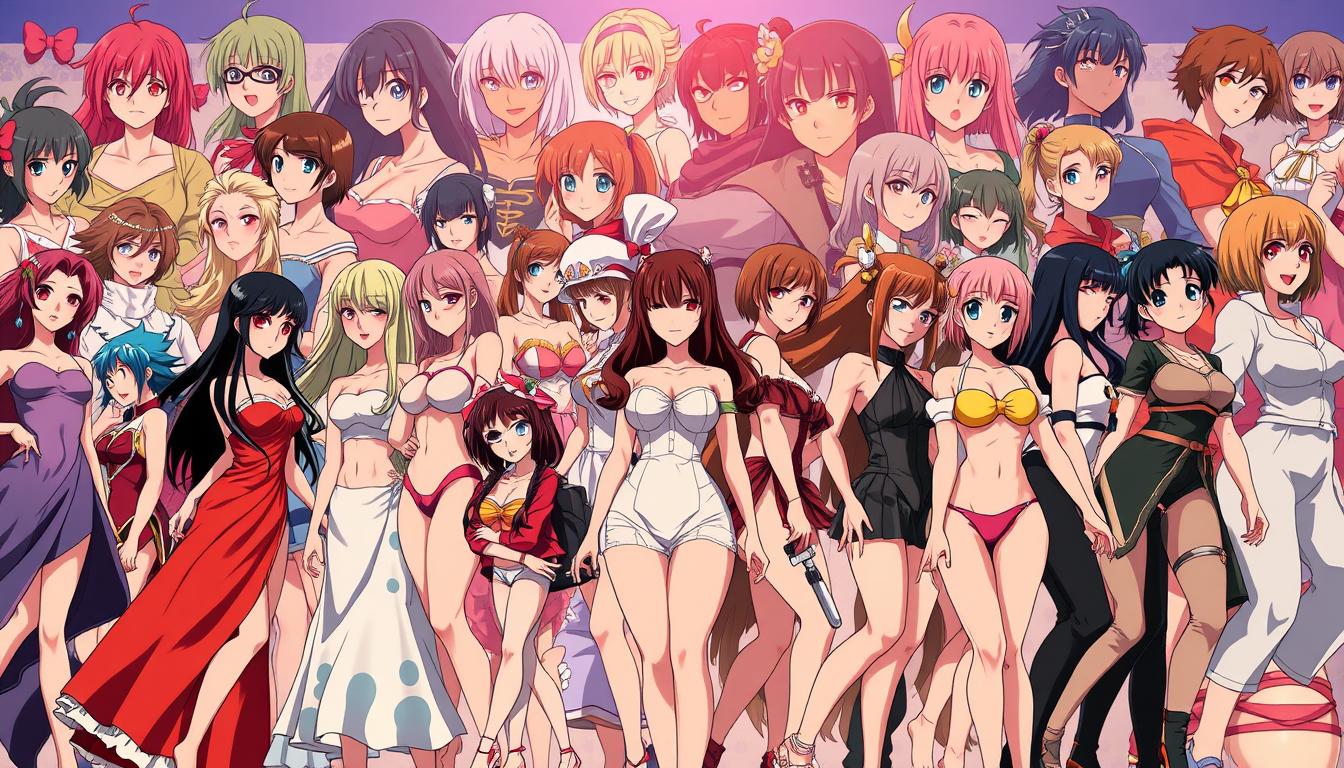
The portrayal of female characters in anime has undergone significant changes over the years, reflecting broader societal shifts and evolving audience expectations.
From the early days of anime to the present, women in anime have transitioned from simplistic, stereotypical representations to complex, multidimensional characters.
Women in Anime
This evolution is a testament to the growing diversity and inclusivity within the anime industry, as well as changing perceptions of gender roles.
Key Takeaways
- The representation of female characters in anime has become more diverse and complex.
- Early anime often featured stereotypical female characters.
- Modern anime showcases a wide range of female characters, reflecting societal changes.
- The evolution of women in anime mirrors broader cultural shifts.
- Female characters in anime now embody a variety of roles and personalities.
The Origins of Female Characters in Early Anime
Pioneering female characters in anime emerged during the 1960s, influencing generations to come. The early anime industry was marked by the introduction of female characters that would later become the foundation for future generations.
The 1960s-1970s: Pioneering Female Characters
The 1960s were a pivotal decade for anime, with the introduction of female protagonists in influential works. These characters paved the way for future female leads.
Influential Works: Astro Boy, Princess Knight, and Sally the Witch
Notable anime series from this period include Astro Boy, Princess Knight, and Sally the Witch. These shows featured female characters in significant roles, often as protagonists or supporting characters with agency.

early anime female characters
Traditional Gender Roles and Stereotypes
Despite the progress made with pioneering female characters, early anime often reinforced traditional gender roles and stereotypes. Female characters were frequently depicted as damsels in distress or in supporting roles.
The Damsel in Distress and Supporting Character Tropes
The portrayal of female characters as damsels in distress or in secondary roles was a common trope. This trope limited the potential of female characters and reinforced stereotypes.
| Character Trait | Traditional Role | Modern Evolution |
| Protagonist | Male hero | Female leads |
| Supporting Character | Subservient role | Independent agency |
| Damsel in Distress | Rescued by male hero | Self-reliant |
The Shōjo Revolution of the 1980s
The 1980s saw a significant shift with the Shōjo Revolution, changing the anime landscape. This period was marked by the emergence of more complex and empowered female characters, thanks in part to the rise of female protagonists in mainstream anime.
Rise of Female Protagonists in Mainstream Anime
Female protagonists became more central to anime narratives, moving beyond traditional roles. Nausicaä of the Valley of the Wind, a film by Hayao Miyazaki, exemplifies this shift. Nausicaä is a strong, independent character who drives the story forward, embodying the qualities of a modern anime heroine.
Case Study: Nausicaä and Miyazaki’s Influence
Miyazaki’s work, particularly Nausicaä of the Valley of the Wind, had a lasting impact on the portrayal of female characters in anime. Nausicaä’s character represents a blend of strength, compassion, and intelligence, setting a new standard for female protagonists.
Influential Female Creators and Their Impact
The Shōjo Revolution was also driven by influential female creators, including the collective known as “The Year24 Group.” These women brought new perspectives and ideas to the shōjo genre, further enriching the representation of women in anime.
The Contributions of “The Year24 Group”
The Year24 Group, a group of talented female manga artists, significantly influenced the shōjo genre, paving the way for future generations of female creators.
Their contributions helped to diversify the types of female characters and storylines in anime, leaving a lasting legacy in the industry.
Women in Anime: Transformation in the 1990s
The 1990s marked a pivotal era for female characters in anime, with significant transformations in their portrayal. This decade saw the rise of more complex and dynamic female characters, challenging traditional stereotypes and gender roles.
The Magical Girl Genre Evolution
The magical girl genre underwent significant evolution in the 1990s, with series like Sailor Moon and Revolutionary Girl Utena redefining femininity. These shows not only appealed to a younger audience but also explored deeper themes related to identity and empowerment.
From Sailor Moon to Revolutionary Girl Utena: Redefining Femininity
Sailor Moon popularized the magical girl genre worldwide, introducing a new generation to the concept of powerful female heroes. Revolutionary Girl Utena pushed the boundaries further, exploring themes of gender identity and societal expectations. Both series contributed to a more nuanced understanding of femininity in anime.
Breaking Gender Barriers with Complex Characters
The 1990s also saw the emergence of complex female characters in sci-fi and action genres, notably in Ghost in the Shell and Neon Genesis Evangelion. Characters like Major Kusanagi from Ghost in the Shell and the female cast in Evangelion broke gender barriers, offering more mature and multi-dimensional portrayals.
Ghost in the Shell’s Major Kusanagi and Evangelion’s Female Cast
Ghost in the Shell presented a futuristic world where Major Kusanagi embodied a blend of strength, intelligence, and complexity, challenging traditional gender roles. Similarly, Neon Genesis Evangelion featured a cast of female characters with deep psychological backstories, adding depth to the narrative.
The transformation of female characters in 1990s anime was marked by a shift towards more complex, empowered, and multi-dimensional portrayals. This evolution paved the way for future generations of female characters in anime.
The 2000s: Diversification of Female Archetypes
The 2000s marked a pivotal era for female characters in anime, as they began to embody a wider range of roles and personalities. This diversification was a result of the evolving tastes of the audience and the creative experimentation by anime creators.
Beyond Stereotypes: Multi-dimensional Characters
Female characters in the 2000s were no longer confined to traditional stereotypes. They became more complex, with richer backstories and nuanced personalities. Characters like Winry Rockbell from Fullmetal Alchemist exemplified this shift. Winr, with her mechanical skills and strong will, represented a new breed of female characters who were capable and independent.
Fullmetal Alchemist, Winry, and Hawkeye: Strength Beyond Combat
Winry Rockbell and characters like Riza Hawkeye from the same series showcased strength not just in combat but through their emotional resilience and professional competence. Hawkeye, as a high-ranking officer, demonstrated leadership qualities that went beyond traditional feminine roles, embodying a character that was both strong and multidimensional.
Female Characters in Traditionally Male-Oriented Genres
The 2000s also saw a significant increase in the presence of female characters within traditionally male-oriented genres like shōnen and seinen anime. These genres, which were once male-dominated, began to feature complex female characters, contributing to a more balanced representation of genders.
The Evolution of Female Representation in Shōnen and Seinen
The inclusion of female characters in shōnen and seinen anime not only added diversity but also brought new dynamics to the narratives. It reflected a broader acceptance and appreciation of diverse female roles, enriching the storytelling and character development in these genres.
Overall, the 2000s were a transformative period for female characters in anime, marking a significant step towards greater diversity and complexity. This evolution paved the way for future generations of female characters, continuing the trend towards more nuanced and multidimensional representations.
Modern Era: Female Representation in Contemporary Anime
The modern anime landscape has seen a significant shift in how female characters are represented. Contemporary anime often showcases a diverse range of female characters, moving beyond traditional stereotypes.
Strong Female Leads and Their Cultural Impact
Series like Violet Evergarden and Demon Slayer have brought strong female leads to the forefront, demonstrating their cultural impact. These characters are complex, with rich backstories and motivations that drive the narrative.
Examining Works Like Violet Evergarden and Demon Slayer
These series highlight the evolution of female characters in anime. Violet Evergarden explores themes of identity and humanity, while Demon Slayer features a strong female protagonist who plays a crucial role in the story.
Industry Changes and the Rise of Female Creators
The anime industry has seen an increase in female creators, contributing to a more diverse range of stories and characters. This shift has helped address some of the historical imbalances in representation.
Addressing Ongoing Challenges and Objectification Issues
Despite progress, challenges remain, including the objectification of female characters. The industry continues to grapple with these issues, striving for more respectful and nuanced portrayals.
The Future of Women in Anime
The representation of women in anime has undergone significant evolution, from traditional gender roles to complex, multi-dimensional characters.
As the anime industry continues to grow, female characters are becoming increasingly diverse, breaking stereotypes and taking on leading roles in various genres.
Industry trends indicate a shift towards more inclusive storytelling, with female creators contributing to the development of authentic female characters.
The future of women in anime looks promising, with potential for continued growth in representation and diversity, reflecting changing societal values and audience expectations.
FAQ
How have female characters in anime evolved over time?
Female characters in anime have undergone significant evolution, from being portrayed as damsels in distress or supporting characters to becoming complex, multi-dimensional protagonists. This transformation reflects broader societal shifts and changes in gender roles.
What was the impact of the Shōjo Revolution in the 1980s on female representation in anime?
The Shōjo Revolution marked a significant shift with the rise of female protagonists and influential female creators, enriching the representation of women in anime with more complex and empowered characters.
How did the magical girl genre evolve in the 1990s?
The magical girl genre evolved significantly in the 1990s with series like Sailor Moon and Revolutionary Girl Utena, redefining femininity and offering more nuanced portrayals of female characters.
What role did female characters play in traditionally male-oriented genres like shōnen and seinen?
Female characters began to appear more frequently in shōnen and seinen genres, taking on diverse roles and challenging traditional gender stereotypes, as seen in series like Fullmetal Alchemist.
How are female characters represented in contemporary anime?
Contemporary anime features strong female leads with significant cultural impact, as seen in works like Violet Evergarden and Demon Slayer, reflecting a continued diversification of female archetypes.
What challenges do female characters in anime still face?
Despite progress, female characters in anime continue to face challenges, including objectification. The industry is addressing these concerns, striving for more respectful and nuanced representations.
How has the role of female creators in the anime industry evolved?
The role of female creators has expanded, with more women contributing to the industry as writers, directors, and producers, influencing the representation of female characters and bringing diverse perspectives.