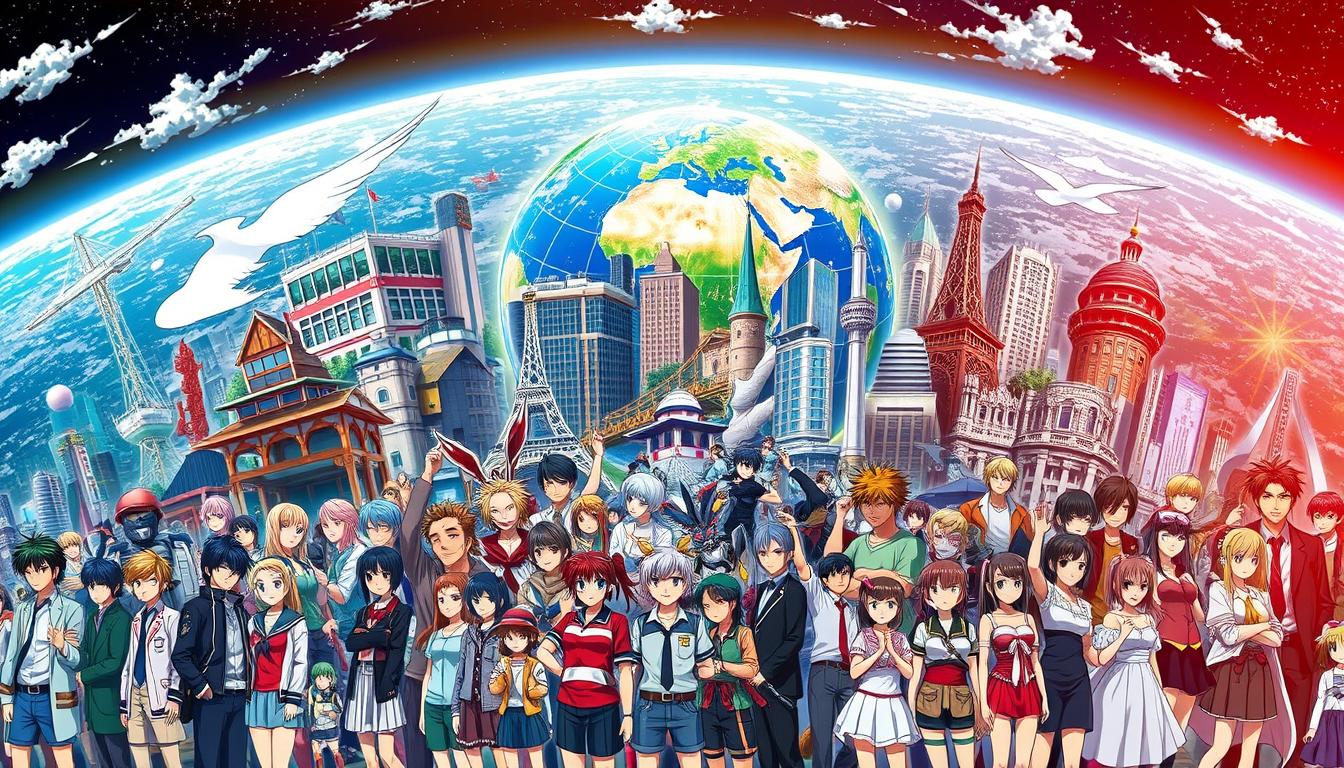
Anime has evolved into a global phenomenon, captivating audiences worldwide with its unique storytelling and vibrant visuals. Once a niche interest, anime has become a mainstream cultural force, influencing global popular culture.
How Anime Conquered the World
The rise of anime to its current status as a cultural powerhouse is a fascinating story that spans decades, involving the contributions of numerous creators and the adaptation of anime to different cultural contexts around the world.
Key Takeaways
- Anime has become a significant part of global popular culture.
- Its influence can be seen in various aspects of modern media.
- The history of anime is complex and multifaceted.
- Anime’s global reach is a result of decades of cultural exchange.
- The evolution of anime reflects changes in societal values and technological advancements.
The Origins of Anime in Japan
Anime’s roots in Japan can be traced back to the early days of animation, with pioneers like Osamu Tezuka leading the way. The development of anime, or Japanese animation, is a story that involves not just artistic innovation but also technological advancement and cultural shifts.
Early Animation Pioneers: Osamu Tezuka and Astro Boy
Osamu Tezuka, often referred to as the “God of Manga,” was instrumental in shaping early anime. His creation, Astro Boy, was one of the first anime series to gain widespread popularity, both domestically and internationally. Astro Boy not only showcased Tezuka’s storytelling ability but also demonstrated the potential for anime to engage a broad audience.
The influence of Astro Boy can be seen in many subsequent anime series. Tezuka’s innovative storytelling and character design set a new standard for the industry.

Osamu Tezuka Astro Boy
Post-War Animation Industry Development
The post-war period in Japan saw significant growth in the animation industry. Studios began to emerge, and with them, new talent and techniques. This era was marked by experimentation and the exploration of different styles, laying the groundwork for the diverse range of anime genres we see today.
- Development of new studios
- Experimentation with different animation techniques
- Emergence of new talent
The 1980s Anime Boom and Technological Advancements
The 1980s saw a significant boom in the anime industry, driven in part by technological advancements. The introduction of video cassette recorders (VCRs) allowed for the wider distribution of anime, making it more accessible to a broader audience. This period also saw advancements in animation techniques, including the use of computer graphics.
Technological innovations and the rise of new studios contributed to the diversification of anime genres, catering to a wide range of interests and age groups.
Anime’s First International Expansion
Anime’s global journey started with pioneering series that broke cultural and linguistic barriers. This marked the beginning of a new era in the history of anime, as it transitioned from a domestic phenomenon to a global entertainment force.
Pioneering Series in Western Markets: Speed Racer and Robotech
Series like Speed Racer and Robotech were among the first to gain significant traction in Western markets. Speed Racer, with its high-speed racing and heroic protagonist, captivated young audiences, while Robotech, with its blend of science fiction and action, appealed to a slightly older demographic. These shows not only introduced anime to new audiences but also paved the way for future series.
As noted by anime historian Fred Patten,
“The success of Speed Racer and Robotech in the West demonstrated that anime could transcend cultural boundaries and achieve mainstream acceptance.”
Fred Patten, Anime historian
The VHS Fan Culture and Underground Distribution
The advent of VHS technology played a crucial role in the dissemination of anime across international borders. Fans began to form clubs and networks, exchanging tapes and information about their favorite series. This underground distribution network was instrumental in fostering a global fan culture, as enthusiasts sought out new content and shared it within their communities.
Anime Film Festivals and Critical Recognition
Anime also gained critical recognition through its showcase at international film festivals. Festivals such as the Anima Mundi and FanTasia provided platforms for anime to be appreciated by broader audiences and to receive critical acclaim. This exposure helped to establish anime as a significant component of global animation and filmmaking.
The recognition at these festivals underscored the artistic and narrative depth of anime, challenging preconceptions and cementing its place in the global entertainment landscape.
How Anime Conquered the World
Anime’s global conquest was facilitated by a combination of hit series and advancements in digital distribution. The late 1990s and early 2000s saw the rise of global phenomena like Pokémon and Dragon Ball, which captivated audiences worldwide.
The Pokémon and Dragon Ball Global Phenomena
The success of Pokémon and Dragon Ball was a pivotal moment in anime’s global expansion. Pokémon, with its engaging concept of collecting and training creatures, became a cultural phenomenon among children and adults alike. Similarly, Dragon Ball, with its epic martial arts tournaments and intense battles, drew in viewers from around the globe. These series not only gained massive followings but also paved the way for other anime shows to enter international markets.
“Pokémon was a game-changer for anime, bringing it to a global audience in a way that was previously unimaginable.” –
A prominent anime critic
Studio Ghibli and Hayao Miyazaki’s International Acclaim
Another significant factor in anime’s global success was the international acclaim received by Studio Ghibli and its co-founder Hayao Miyazaki. Films like Spirited Away and My Neighbor Totoro won numerous awards and captivated global audiences with their unique storytelling and beautiful animation. Miyazaki’s works, in particular, have been praised for their depth and universality, resonating with viewers across different cultures.
- Spirited Away won the Academy Award for Best Animated Feature.
- My Neighbor Totoro became a beloved classic worldwide.
- Studio Ghibli’s films are known for their environmental and social themes.
Streaming Services and Digital Distribution Revolution
The advent of streaming services marked a significant shift in how anime was consumed globally. Platforms like Crunchyroll, Funimation, and Netflix began offering vast libraries of anime content, making it easier for fans to access their favorite shows. This digital distribution revolutionized the way anime was marketed and consumed, allowing for simultaneous global releases and catering to the growing demand for anime content.
The combination of hit series, critically acclaimed films, and advancements in digital distribution has been instrumental in anime’s global conquest. As the anime industry continues to evolve, it is likely that its global popularity will endure, driven by the creativity of its creators and the enthusiasm of its fans.
The Cultural and Economic Impact of Anime
Anime’s impact extends far beyond Japan, affecting cultural and economic landscapes worldwide. The global anime phenomenon has not only shaped entertainment but also influenced various industries and cultural practices.
Anime’s Influence on Hollywood and Western Media
Anime has significantly influenced Hollywood and Western media, with many films and TV shows drawing inspiration from anime styles and storytelling techniques. For instance, movies like Avatar and The Matrix have been influenced by anime’s visual and narrative styles. The success of anime has also encouraged collaborations between Japanese and Western studios, leading to the production of content that blends different cultural elements.
The Global Manga and Merchandise Industry
The global manga market has seen substantial growth, with translations and digital platforms making manga more accessible worldwide. The merchandise industry surrounding anime and manga has also expanded, with fans purchasing a wide range of products from figurines to clothing. This industry supports not only the anime and manga creators but also contributes to local economies where these products are manufactured and sold.
Conventions, Cosplay, and Community Building
Anime conventions have become major events globally, attracting fans who participate in cosplay, attend screenings, and engage in discussions about their favorite series. These events foster a sense of community among fans and provide a platform for creators to showcase their work. Cosplay, in particular, has become a significant aspect of fan culture, with individuals creating elaborate costumes that reflect their creativity and passion for anime and manga characters.
Conclusion: Anime’s Continuing Evolution in Global Entertainment
Anime has traversed a remarkable journey, from its humble beginnings in Japan to becoming a global entertainment phenomenon. The evolution of anime has been marked by significant milestones, including the pioneering work of Osamu Tezuka, the international expansion through series like Speed Racer and Robotech, and the global phenomena of Pokémon and Dragon Ball.
The rise of Studio Ghibli and the international acclaim for Hayao Miyazaki’s films have further solidified anime’s position in global entertainment. The advent of streaming services and digital distribution has made anime more accessible than ever, contributing to its widespread popularity. As anime continues to evolve, it is likely to have an even more profound impact on global entertainment, influencing Hollywood and Western media, and shaping the broader cultural landscape.
The future of anime looks promising, with ongoing innovations in production, distribution, and fan engagement. As the global appetite for anime continues to grow, it is poised to remain a significant player in the global entertainment industry, offering new and exciting content to audiences worldwide.
FAQ
What is anime, and how did it originate?
Anime is a style of Japanese animation that originated in the early 20th century. It evolved from Japanese manga and was influenced by Western animation techniques. Osamu Tezuka, known as the “God of Manga,” played a significant role in shaping the anime industry with his works, such as Astro Boy.
How did anime become popular globally?
Anime’s global popularity can be attributed to several factors, including the rise of streaming services, the success of series like Pokémon and Dragon Ball, and the international acclaim received by Studio Ghibli and Hayao Miyazaki’s works. The VHS fan culture and underground distribution networks also contributed to its global spread.
What role did Osamu Tezuka play in the development of anime?
Osamu Tezuka was a pioneering manga artist and animator who is often credited with creating the modern anime style. His works, such as Astro Boy, were instrumental in shaping the anime industry and influencing future generations of anime creators.
How has anime influenced Western media and culture?
Anime has had a significant influence on Western media and culture, with many filmmakers and animators citing anime as an inspiration. The success of anime has also led to the creation of Western anime-style productions and the incorporation of anime elements into mainstream media.
What is the significance of Studio Ghibli in the anime industry?
Studio Ghibli is a renowned anime studio known for producing high-quality, imaginative films that have gained international recognition. The studio’s works, such as Spirited Away and My Neighbor Totoro, have been critically acclaimed and have helped to promote anime globally.
How has the rise of streaming services impacted the anime industry?
The rise of streaming services has revolutionized the anime industry, making it easier for fans to access anime content globally. Streaming services have also provided a platform for new and emerging anime creators to showcase their work, further diversifying the anime landscape.
What is the current state of the global anime industry?
The global anime industry continues to grow, with new series, films, and merchandise being released regularly. The industry is driven by a dedicated fan base, and its global reach is expanding through streaming services, conventions, and community building.


